
How to Process Alluvial Tin Ore and What Equipment Is Required
Alluvial tin ore is a type of secondary sedimentary tin ore. Cassiterite in this ore features high monomer dissociation, yet it contains large amounts of slime and has a wide particle‑size distribution. It is frequently associated with impurities such as quartz, feldspar, iron‑manganese oxides, zircon sand and ilmenite. The core concept of its beneficiation process is ore washing and desliming, classification and separation, and cassiterite recovery by particle size, so as to avoid interference of fine slime on gravity separation.
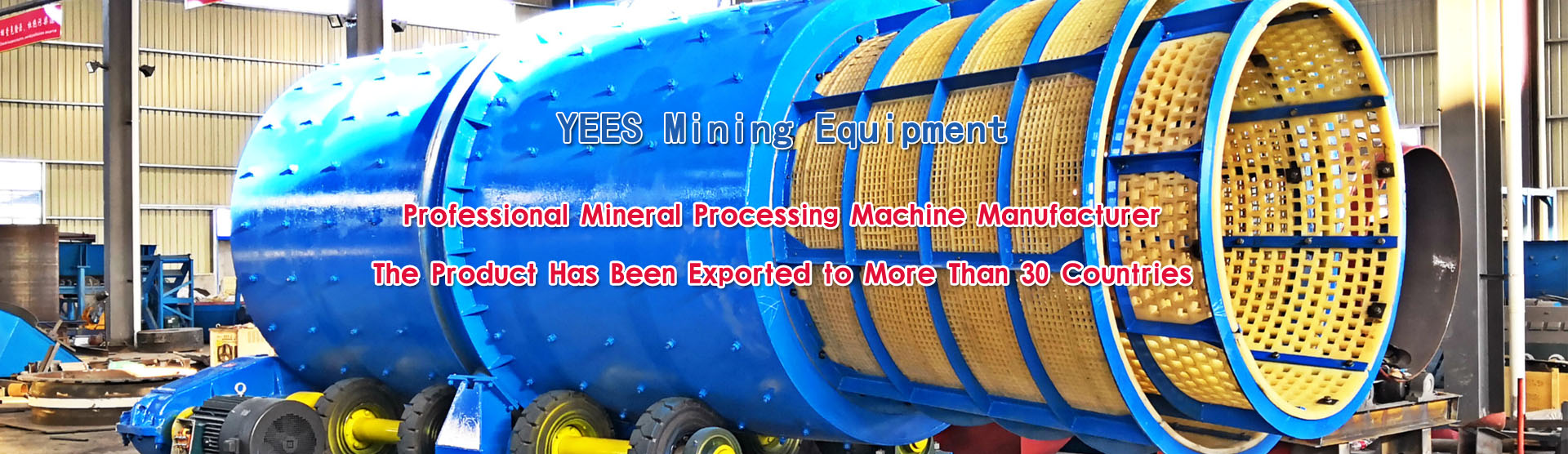
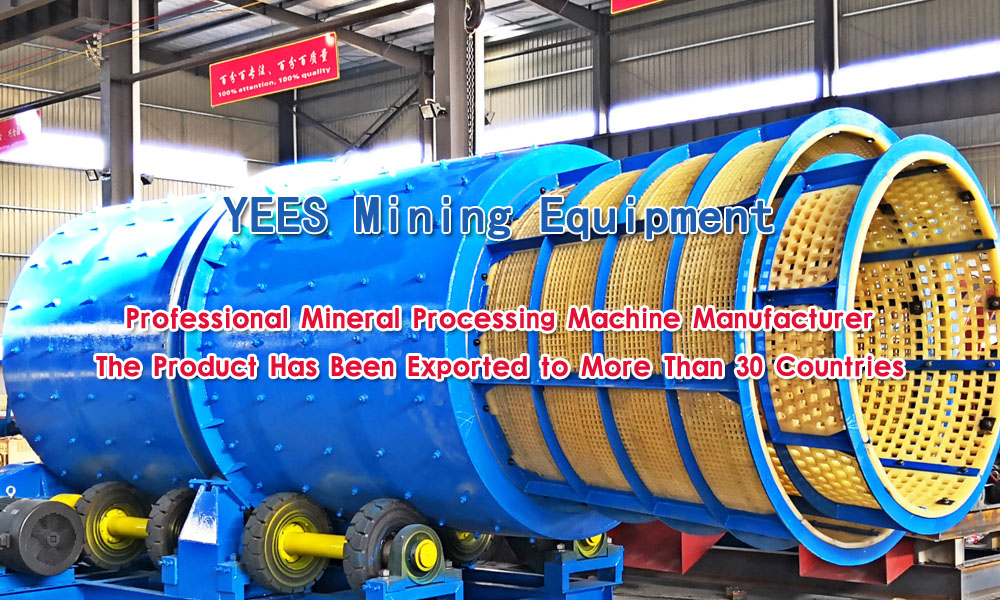
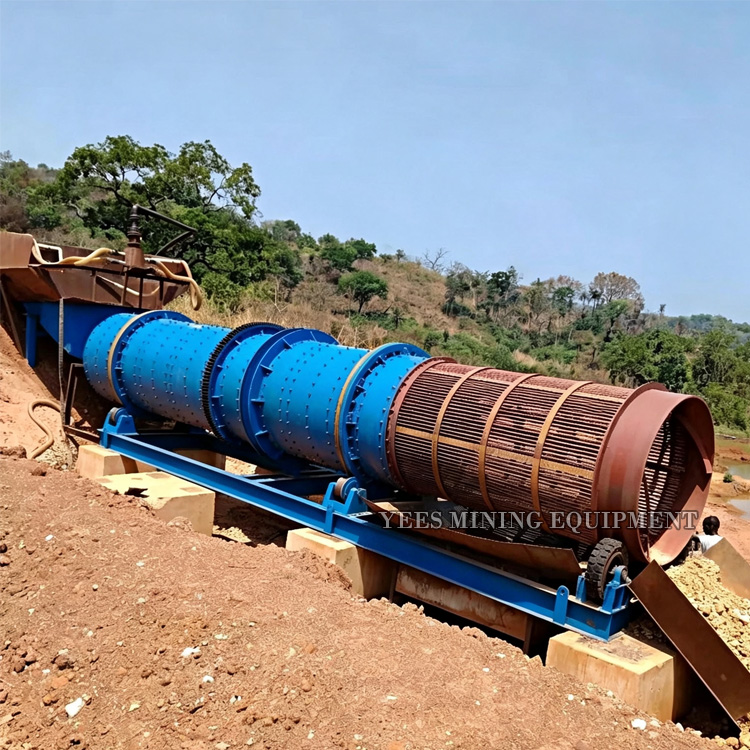
The first step of alluvial tin ore beneficiation is ore washing and classification. Raw ore usually carries abundant clay. Slime may coat cassiterite and reduce separation accuracy. Therefore, a rotary scrubber trommel is prioritized to break up agglomerated ore slime. It is combined with vibrating screens for multi‑stage screening to separate coarse sand, medium sand, fine sand and ore slime. For ore zones with high slime content, spiral washers can be added for further desliming to discard part of low grade waste slime in advance and ease the load of downstream equipment.
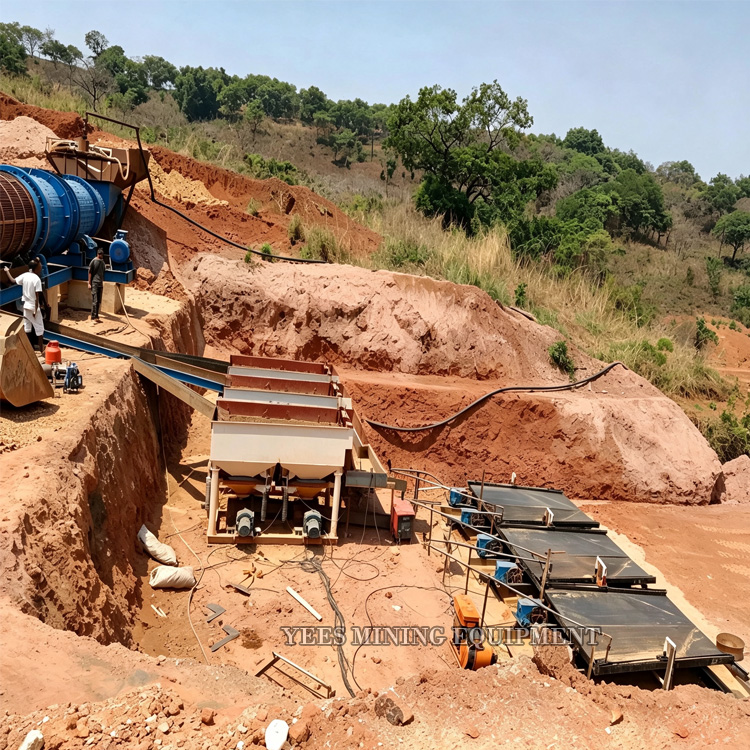
After classification, corresponding gravity separation equipment shall be selected according to particle sizes, which forms the core of alluvial tin ore separation. Coarse‑grained materials are generally fed into a saw‑tooth wave jig machine. It boasts large processing capacity and is suitable for rough separation and tailings discarding to rapidly recover coarse‑grained cassiterite. Medium‑grained materials go into shaking tables for mineral separation. Shaking tables deliver a high enrichment ratio and can produce qualified tin concentrates. They are also the most widely‑used cleaning equipment for alluvial tin ore. For fine‑grained materials and ore slime, spiral chutes are adopted for rough concentration, followed by centrifugal concentrators to capture fine‑grained cassiterite, making up for insufficient fine‑slime recovery by conventional gravity separation.
Most alluvial tin ores are associated with magnetic minerals. To improve the grade of tin concentrates, plate‑type high‑intensity magnetic separators and drum magnetic separators are incorporated into the process to separate magnetic impurities including magnetite, limonite and ilmenite.
Tin concentrates obtained from separation have relatively high moisture content and then proceed to the dewatering section. Sedimentation tanks are commonly used for natural sedimentation and water drainage. Dewatering screens or filter presses can also be applied for dewatering to obtain dry tin concentrates convenient for stockpiling and transportation.
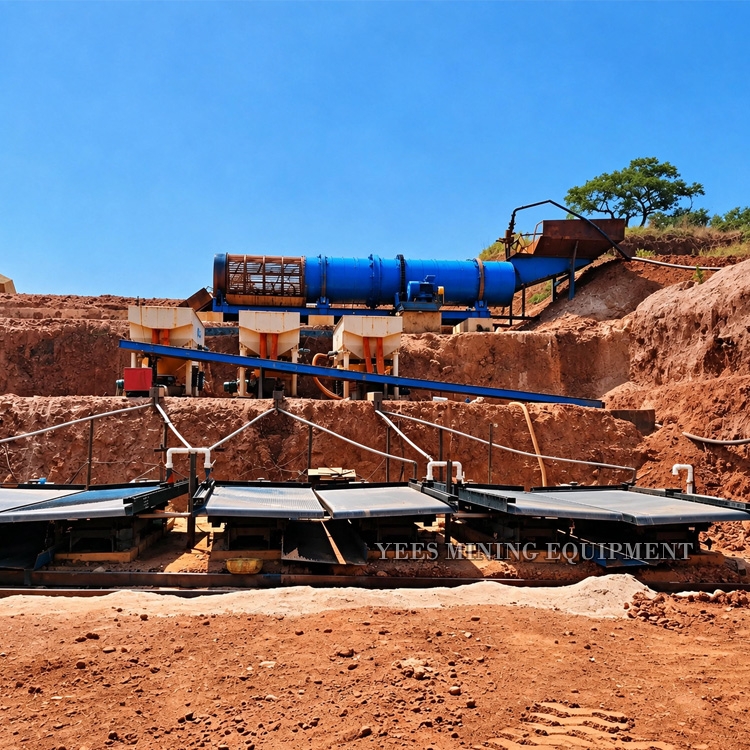
There is no universal fixed process for alluvial tin ore. The slime content, cassiterite grain size, associated minerals and site production capacity will all affect the solution. For residual‑slope alluvial tin ore with extremely high slime content, more equipment shall be deployed in the ore‑washing and desliming stage. For ore sources with fine particles, equipment for fine‑slime recovery shall be emphasized. Preliminary sampling, assay and beneficiation tests serve as vital guarantees for stable recovery rates.
Rotary scrubber trommel introduction: https://yeesmachine.com/Product/489.html
Vibrating screen introduction: https://yeesmachine.com/Product/495.html
Spiral washer introduction: https://yeesmachine.com/Product/492.html
Jig machine introduction: https://yeesmachine.com/Product/481.html
Spiral chute introduction: https://yeesmachine.com/Product/480.html
Shaking table introduction: https://yeesmachine.com/Product/478.html
Centrifugal concentrator introduction: https://yeesmachine.com/Product/478.html
Plate‑type high‑intensity magnetic separator introduction: https://yeesmachine.com/Product/511.html
Magnetic separator introduction: https://yeesmachine.com/Product/510.html
YEES Mining Equipment Manufacturing Factory has long focused on gravity separation processes for alluvial tin ore and is familiar with separation working conditions of alluvial tin ore across multiple regions in Africa. Customized complete beneficiation solutions can be provided based on ore sample test results, site conditions and production‑capacity targets, covering the full chain of process planning, equipment manufacturing, installation & commissioning and operation‑maintenance guidance. The factory supplies a full set of equipment including rotary scrubber trommels, jig machines, shaking tables, spiral chutes, centrifugal separators, magnetic separators and dewatering equipment.